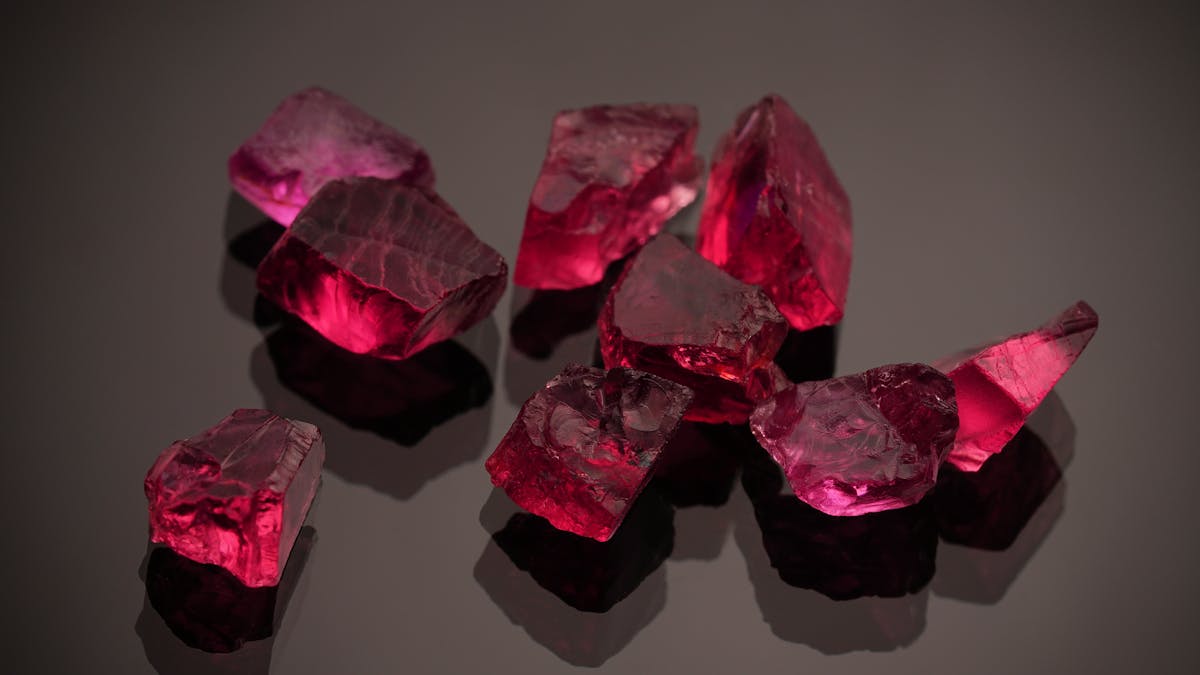
A Star in a Sea of Red
A star ruby is a ruby that shows asterism — a six-rayed star that glides across the dome of the stone. It combines two prized qualities: the warm red of ruby and the moving star of a cabochon gem. Sri Lanka is one of the classic sources of fine star rubies.
How the Star Forms
As with star sapphire, the effect comes from microscopic needle-like rutile inclusions arranged in three directions. Cut as a smooth cabochon, the stone reflects light into a six-rayed star, best seen under a single light source.
What Affects Value
- Star quality — sharp, straight, well-centred rays.
- Body colour — a strong, even red is most prized (purplish or brownish tints reduce value).
- Translucency — a glowing, semi-translucent body is ideal; very dark, opaque stones less so.
- Cut — a symmetrical, well-domed cabochon centres the star.
Buying Tip
Tilt the stone under a single light — the rays should stay straight and centred, and the body should glow rather than look flat and dark. Buy from a licensed dealer; see our buyer's guide.
See the Source
Browse Ratnapura accommodation to explore the home of Ceylon star gems.
Quick Facts
| Mineral | Corundum (ruby) |
| Effect | Six-rayed star (asterism) |
| Cause | Rutile "silk" needle inclusions |
| Cut | Cabochon |
| Colour | Red (purplish/brownish reduces value) |
| Hardness | 9 (Mohs) |
Frequently Asked Questions
What is a star ruby? A ruby cut as a cabochon that displays a six-rayed star (asterism) gliding across its dome.
What makes a fine star ruby? A sharp, centred star, a strong even red body, and some translucency so the stone glows rather than looks dark and flat.
How is the star formed? By microscopic rutile needle inclusions arranged in three directions, reflecting light into the star.
Is Sri Lanka a good source? Yes — Sri Lanka is one of the classic sources of fine star rubies.