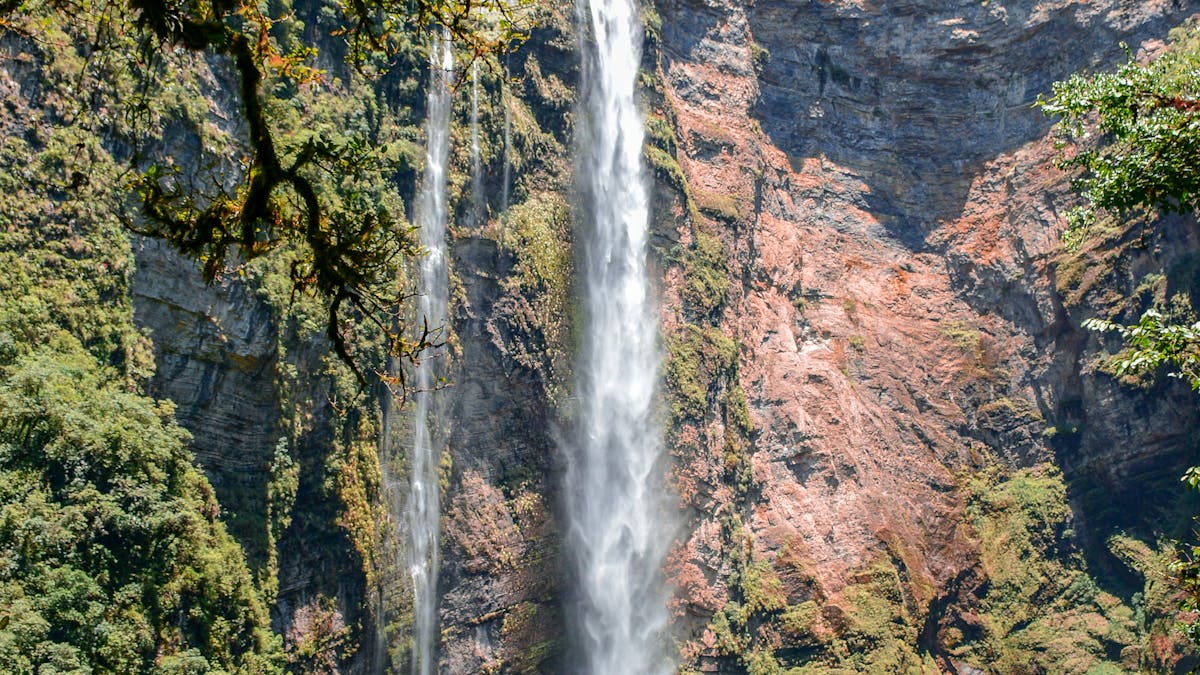
A Towering Falls Few People See
Kurundu Oya Falls is among the tallest waterfalls in Sri Lanka, dropping roughly 189 metres in a series of cascades through the highlands of the Nuwara Eliya district. Despite its height, it sees only a fraction of the visitors of more famous falls, making it a rewarding find for travellers who like their nature quiet and wild.
What to Expect
- A tall, multi-tier cascade tumbling down forested slopes
- Cool highland scenery of tea country and mountain forest
- A peaceful, uncommercialised atmosphere
- Rough access roads and modest facilities — part of the adventure
Best Time to Visit
Like all hill-country falls, Kurundu Oya is fullest after the rains (roughly October to January). The drier months give safer footing on the approach. Mornings are best for light and clear views.
Getting There & Tips
- Reached via minor roads in the Walapane/Kandapola area; ask locally for directions.
- A local guide is helpful, as signage is limited.
- Wear sturdy shoes and check weather before heading out.
Where to Stay
The natural base is Nuwara Eliya, with its cool climate and tea-country charm. See our complete waterfalls guide.
Quick Facts
| Height | ~189 m — among the highest in Sri Lanka |
| River | Kurundu Oya |
| Location | Walapane area, Nuwara Eliya District |
| Nearest town | Nuwara Eliya (via Kandapola/Walapane) |
| Best season | October–January (peak flow) |
| Crowds | Low — a quiet, off-the-trail falls |
How to Get There
- From Nuwara Eliya: ~1.5–2 hours toward Kandapola and the Walapane road on winding hill routes.
- Last stretch: Minor roads — a tuk-tuk or sturdy car is best, and asking locals for directions helps.
- Public transport: Buses run toward Walapane; alight nearby and take a tuk-tuk for the final approach.
Nearby Attractions
- Nuwara Eliya — Gregory Lake, tea factories, colonial architecture
- Pedro Tea Estate — classic working tea estate tours
- Horton Plains — within reach for a highland day out
Frequently Asked Questions
How tall is Kurundu Oya Falls? Roughly 189 metres, making it one of the tallest waterfalls in Sri Lanka.
Is it crowded? No — its remote location means it sees few visitors, which is part of its appeal.
Do I need a guide? Signage is limited and the access roads are minor, so a local guide or asking villagers for directions is helpful.
When is the flow best? After the rains, roughly October to January. The drier months make the approach easier but the flow is gentler.