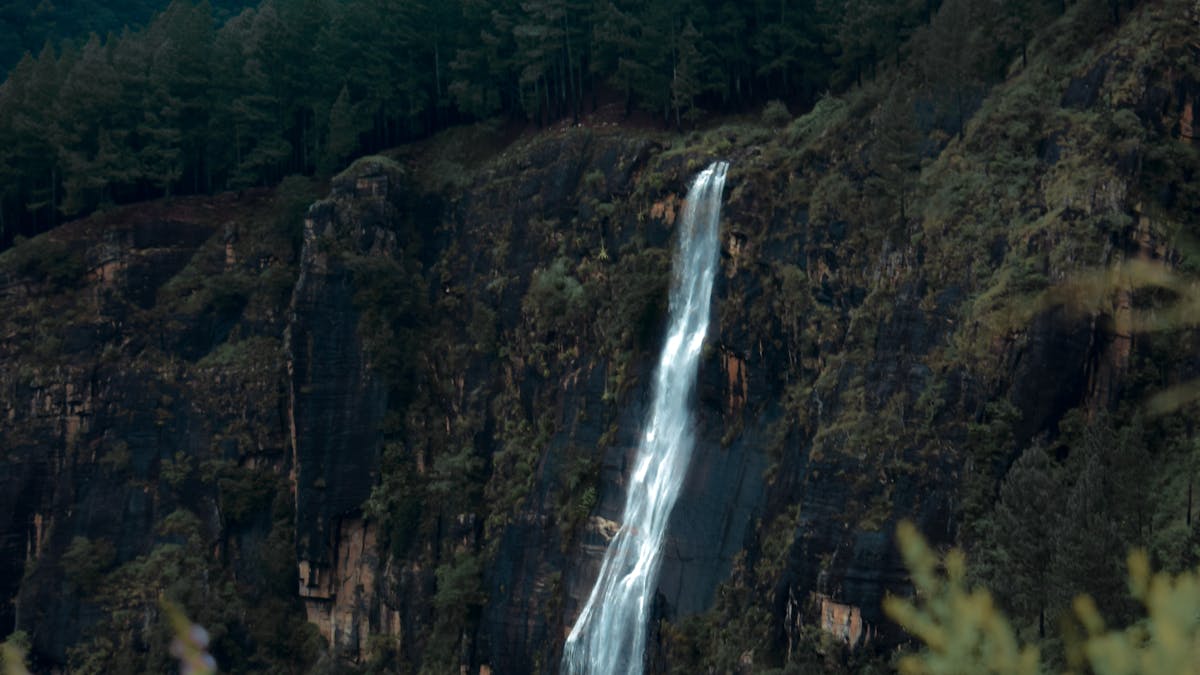
A Thundering Plunge in the Hills
Aberdeen Falls drops about 98 metres in a single powerful plunge on the Kehelgamu Oya, near Ginigathena in the Nawalapitiya area. Named — like several highland features — after a place in Scotland by colonial-era planters, it's a favourite with adventurous travellers for its dramatic flow and the inviting pool at its base.
What to Expect
- A steep, forceful single-drop cascade
- A trek down to the base (and a tougher climb back up)
- A base pool where the brave sometimes swim — only when flow is safe
- Lush, green hill scenery throughout
Getting There & Tips
- Reached via the Ginigathena/Nawalapitiya area; the final descent is on a steep footpath with steps.
- Allow time and energy for the climb back up — it's strenuous.
- Wear proper shoes; the path is slippery when wet.
Best Time to Visit
Aberdeen is spectacular after the rains (October–January), though the trail is muddier then. The drier months offer safer footing. Visit in the morning for the best light and a less tiring climb.
Where to Stay
Base around Nawalapitiya, Ginigathena, or Hatton. See our complete waterfalls guide.
Quick Facts
| Height | ~98 m — a single powerful plunge |
| River | Kehelgamu Oya |
| Location | Near Ginigathena / Nawalapitiya |
| Nearest towns | Nawalapitiya, Ginigathena, Hatton |
| Access | Steep footpath with steps to the base |
| Best season | October–January (muddier trail then) |
How to Get There
- From Nawalapitiya: ~45 minutes toward Ginigathena, then a side road to the trailhead.
- From Hatton: ~1 hour via Ginigathena.
- By train: Nearest stations are on the main hill line; continue by tuk-tuk/car to the trailhead.
Nearby Attractions
- Galboda Falls — another cascade near Watawala
- St. Clair's & Devon Falls — within reach via Talawakele
- Kitulgala — white-water rafting, about an hour away
Frequently Asked Questions
How tall is Aberdeen Falls? About 98 metres in a single dramatic drop.
Is the hike difficult? The descent to the base is on a steep stepped path; the climb back up is strenuous, so allow time and energy.
Can you swim at the base? There's a pool at the bottom, but only consider it when flow is gentle and safe — currents can be strong.
Why the Scottish name? Like several highland features, it was named by colonial-era planters after a place in Scotland.