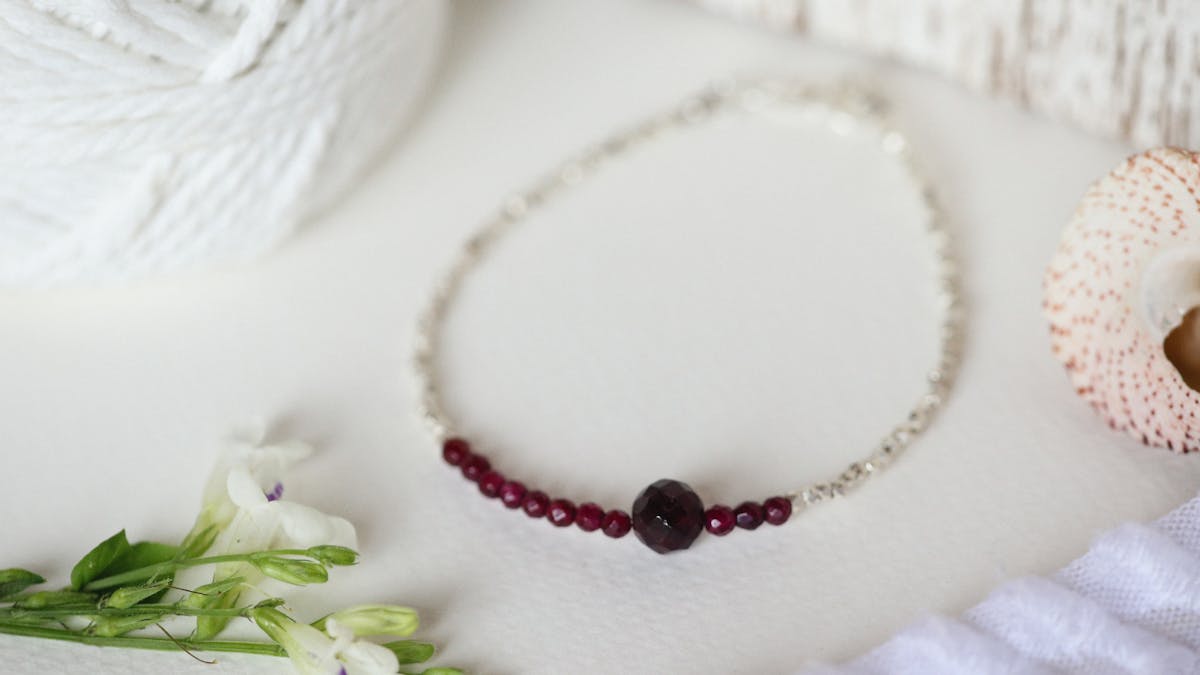
Not One Gem, But a Family
Garnet isn't a single mineral but a whole group of related gems that share a crystal structure and come in nearly every colour. Sri Lanka produces several garnet varieties from its rich gem gravels. With a hardness of around 6.5–7.5, garnets are durable enough for most jewellery.
The Main Types You'll See
- Almandine — deep, rich red, the classic garnet colour
- Rhodolite — a beautiful purplish-red to raspberry pink, very popular
- Spessartite — vivid orange to mandarin
- Hessonite (grossular) — honey to cinnamon brown, known in South Asia as gomeda and valued in astrology
- Colour-change garnet — rare stones that shift colour between daylight and lamplight
What Affects Value
- Colour — bright, vivid, clean colours are most prized; rhodolite and fine spessartite command premiums.
- Clarity — eye-clean stones preferred.
- Cut & carat — well-cut larger stones cost more.
- Natural — garnet is typically not treated, a plus for buyers.
Cultural Note
Hessonite garnet (gomeda) is one of the nine sacred gems (navaratna) in South Asian astrology, adding to its demand.
See the Source
Browse Ratnapura accommodation and the Island of Gems overview.
Quick Facts
| Type | A group of related minerals |
| Colours | Red, purplish-red, orange, honey-brown |
| Key types | Almandine, rhodolite, spessartite, hessonite |
| Hardness | ~6.5–7.5 (Mohs) |
| Treatment | Typically none |
| Astrology | Hessonite = gomeda (navaratna) |
Frequently Asked Questions
Is garnet just one gem? No — it's a whole family of related gems that come in nearly every colour, sharing a crystal structure.
Which garnet is most valuable? Fine rhodolite (raspberry-pink) and vivid spessartite (mandarin orange) command premiums.
Is garnet treated? Usually not — most garnet is natural and untreated, a plus for buyers.
What is gomeda? Hessonite garnet, one of the nine sacred gems (navaratna) in South Asian astrology.