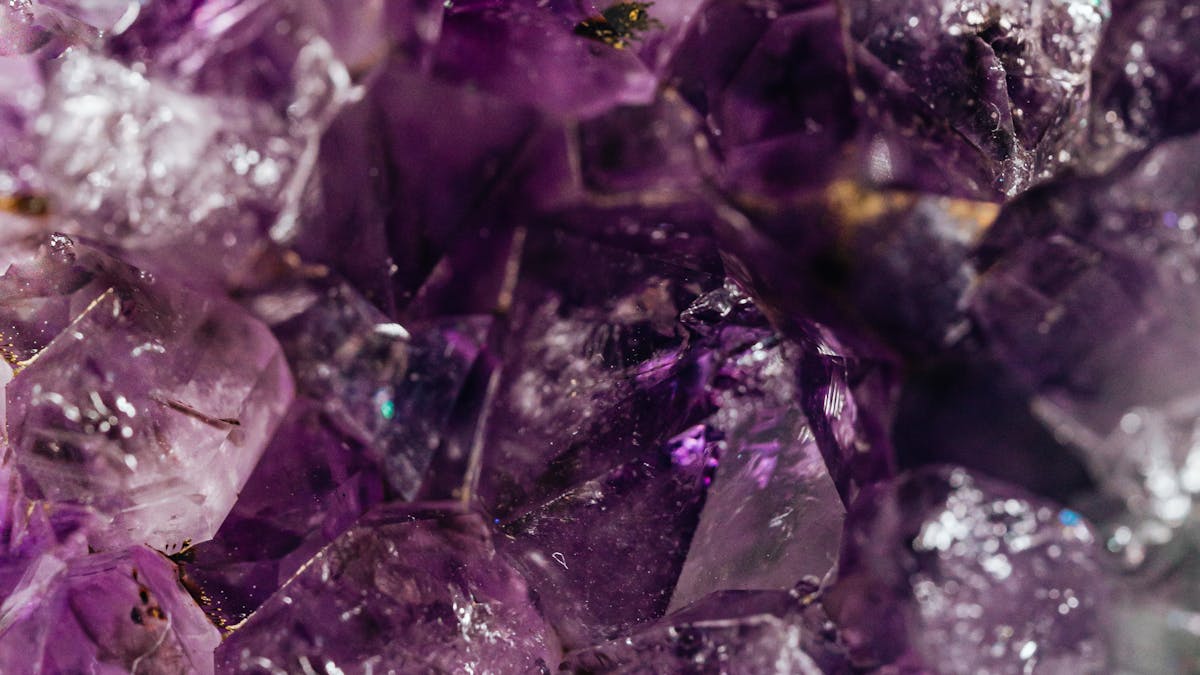
Purple Fit for Royalty
Amethyst is the purple variety of quartz, ranging from soft lilac to deep, rich violet. Once as prized as ruby and emerald and reserved for royalty, large discoveries later made it wonderfully affordable — so today you can own a big, beautiful amethyst without a big price. Sri Lanka's gem fields produce attractive amethyst, and it's a popular choice for bold jewellery.
Amethyst has a hardness of 7, good for everyday wear with a little care.
Colour and Value
- Colour — a deep, even reddish-purple ("Siberian" grade) is most prized; pale stones are very affordable.
- Clarity — amethyst is usually eye-clean.
- Cut & carat — large clean stones are readily available and reasonably priced.
History and Lore
The name comes from the ancient Greek amethystos, meaning "not intoxicated" — it was believed to protect the wearer from drunkenness. It remains one of the world's most popular and recognisable gems.
Care Tip
Prolonged exposure to strong sunlight or heat can fade amethyst's colour, so avoid leaving it in direct sun for long periods. Clean with warm soapy water.
See the Source
Browse Ratnapura accommodation and the Island of Gems overview.
Quick Facts
| Mineral | Quartz (purple variety) |
| Colour | Lilac to deep reddish-violet |
| Hardness | 7 (Mohs) |
| Affordability | Large clean stones are inexpensive |
| Care note | Strong sun/heat can fade colour |
| Main SL source | Ratnapura gem fields |
Frequently Asked Questions
What is amethyst? The purple variety of quartz, ranging from soft lilac to deep violet.
Why is it affordable now? Once as prized as ruby, large discoveries made amethyst widely available, so big beautiful stones are inexpensive today.
Does it fade? Prolonged exposure to strong sunlight or heat can fade its colour — avoid leaving it in direct sun for long.
What does the name mean? From the Greek amethystos, "not intoxicated" — it was once believed to protect against drunkenness.